Microtunneling contractors win bigger infrastructure projects by building a track record of long, large-diameter drives, prequalifying with major owners and engineering firms, and teaming with prime contractors on design-build work. Big projects are awarded on proven capability and bonding capacity, not price alone, so the contractors who show they can handle deep, precise drives under rivers and rail lines are the ones who get shortlisted.
This guide covers how to position for major work, prove your capability, and get in front of the owners and primes who award it. Plain English, no filler.
What makes microtunneling projects different?
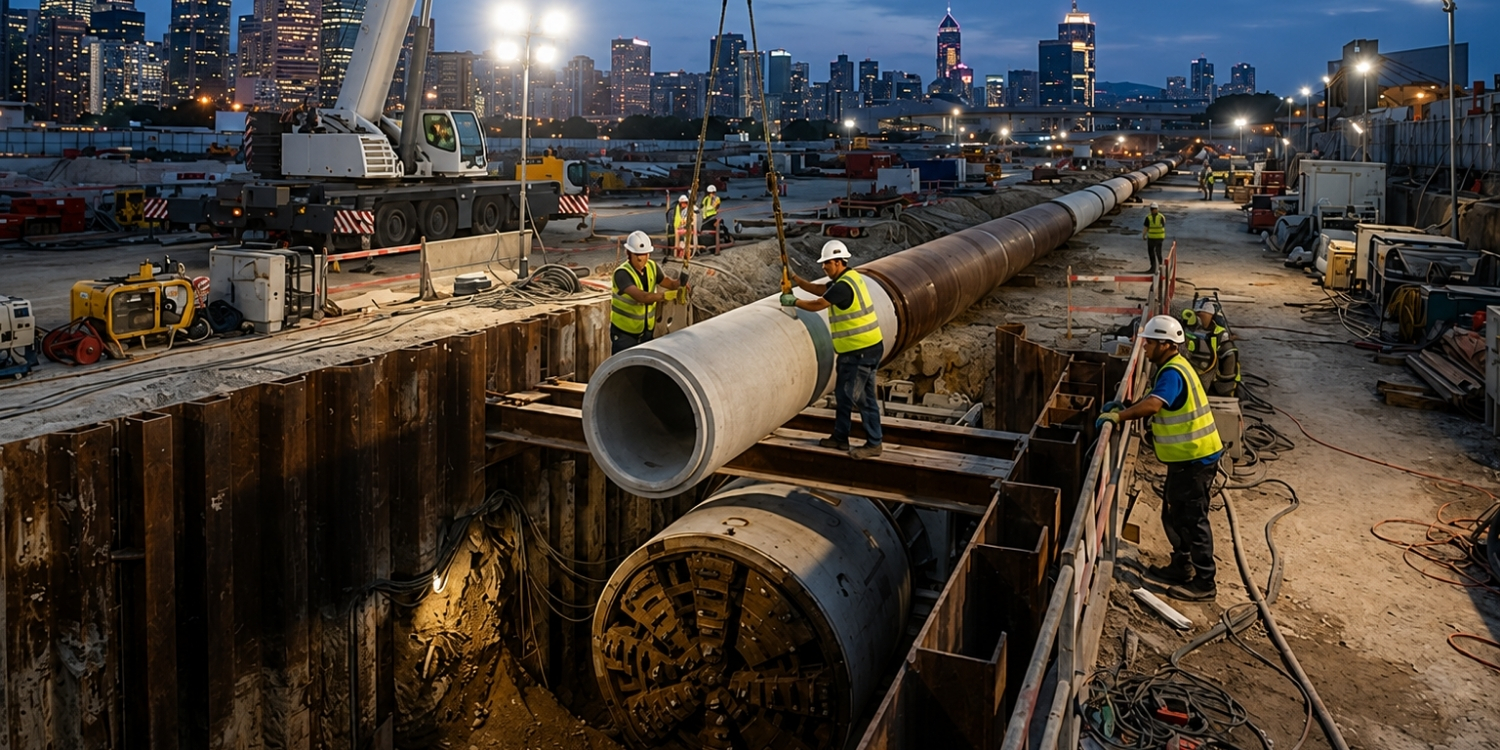
Microtunneling sits at the high end of trenchless work. A remote-controlled boring machine installs pipe to a laser-guided line and grade, which is what large gravity sewers and deep crossings demand. The tolerances are tight and the stakes are high.
Precision is the point. A gravity sewer has to hold an exact grade over a long run, or it does not flow. Microtunneling delivers that accuracy where other methods cannot, which is why owners specify it for their most demanding pipelines.
These projects are bigger in every way: larger diameters, longer drives, deeper shafts, and tougher ground. Fewer contractors can do them, which is both the challenge and the opportunity. Prove you belong in that group, and you compete for work most firms cannot touch.
How do owners choose a microtunneling contractor for big projects?
Major infrastructure work rarely goes to the low bidder off the street. Owners use a two-step process. First they prequalify contractors, then they invite the qualified few to bid or propose.
- A statement of qualifications, showing similar drives by length, diameter, and ground type.
- Bonding capacity large enough for a multi-million-dollar project.
- A safety record clean enough for high-risk underground work.
- Key personnel with experience running the machines and managing the risk.
The engineering firm that designed the project often shapes these requirements. Get on their radar early, and the qualifications tend to fit how you already work.
How do you prove capability for bigger drives?
Owners and engineers are cautious because a stuck machine or a missed grade on a major drive is a serious, public problem. They favor contractors who can prove similar work done cleanly. Make your record specific.
- Drive lengths and pipe diameters you have completed, with the largest clearly shown.
- Ground conditions handled, such as soft ground, rock, mixed face, or high water table.
- Crossings under rivers, railways, and highways, with the constraints you managed.
- Your machine fleet and the guidance and separation systems you run.
- References from owners and engineers on completed infrastructure jobs.
A vague claim of experience means little on a major project. A record of a 1,000-foot drive at a large diameter through mixed ground tells an engineer exactly what they need to know.
How does teaming with prime contractors win the biggest work?
The largest infrastructure projects are often design-build or run by a prime contractor who manages the whole job. On those, the prime brings in a microtunneling specialist as a partner or subcontractor. Being that specialist is one of the fastest ways to reach bigger work.
So the goal is to be the trenchless name primes and major engineers already know. When they are assembling a team for a large bid, you want to be the first call, not a stranger they have to vet from scratch. Joint ventures work the same way, letting you take on projects larger than your firm could bond alone.
How does marketing get you in front of the right people?
Primes, owners, and engineers all research before they team up or shortlist. If they cannot find you or cannot see your capability, you are not in the conversation.
Start with search. SEO for trenchless work gets you found for terms like microtunneling contractor and trenchless infrastructure in your region. Your website then has to prove it, with drive stats, equipment, and completed crossings front and center.
Then build presence where the decision-makers are. A steady feed on LinkedIn and industry channels keeps your major drives in front of primes and engineers. Attend NASTT No-Dig and industry conferences, and present on the tough jobs you have solved. That is where reputations for big work are built.
What is the biggest mistake microtunneling contractors make?
The biggest mistake is staying invisible and hoping capability speaks for itself. A firm does excellent drives, but its website shows almost nothing, so owners and primes never learn what it can handle. On major projects, if they cannot see your record, it does not count.
The second mistake is chasing bids alone instead of building relationships. The biggest work is won through teams and prequalification set months ahead. Contractors who only watch bid portals miss the projects that were shaped long before they were posted.
How do you grow the capacity to bid bigger work?
Bonding capacity is often the real ceiling on project size. Owners want proof you can carry the financial weight of a major job, so building that capacity is part of winning bigger work, not just a formality.
Grow it the same way you grow a reputation: one completed project at a time. Finish mid-size drives cleanly, document them well, and keep your financials and safety record strong. Each success raises what your surety will bond, which raises the size of project you can chase. Teaming and joint ventures also let you reach beyond your own limit by sharing the risk with a partner.
How long does it take to move up to bigger projects?
It is a multi-year climb, but visibility can move quickly. A stronger website and search presence can put your capability in front of engineers and primes within a couple of months. Prequalification and teaming build over project cycles. Each major drive you complete and document makes the next, bigger one easier to win.
For a trenchless contractor we worked with, better visibility and a site built to convert produced more than 90 keywords in Google's top 10 and a steadier flow of inquiries. The firm was not a microtunneling specialist, but the pattern holds: get found, prove your work, and compete for bigger jobs. Trenchless Marketing Agency does that work for microtunneling contractors. Our guide to SEO for trenchless drilling walks through the approach.
Frequently asked questions
How do microtunneling contractors get prequalified for major projects?
By submitting a statement of qualifications with similar drives, adequate bonding capacity, a clean safety record, and experienced key personnel. Owners prequalify first, then invite the qualified few to bid.
Why is teaming with prime contractors important?
The largest projects are often design-build, run by a prime who brings in a microtunneling specialist. Being that trusted partner is one of the fastest routes to bigger work.
What capability do owners want microtunneling contractors to prove?
Drive lengths and diameters completed, ground conditions handled, crossings under rivers and rail, machine fleet, and references from past infrastructure jobs.
How soon can we position for bigger infrastructure work?
Visibility can improve within a couple of months. Prequalification, relationships, and teaming build over project cycles, with each completed drive strengthening the next bid.
Does bonding capacity limit which projects we can win?
Often, yes. Owners want assurance you can carry a major job. You grow capacity by completing projects cleanly, keeping strong financials, and teaming or forming joint ventures to share risk on the largest work.
Want this handled for you?
We do this for trenchless contractors every day. Book a free strategy call and we will map a plan for your market.