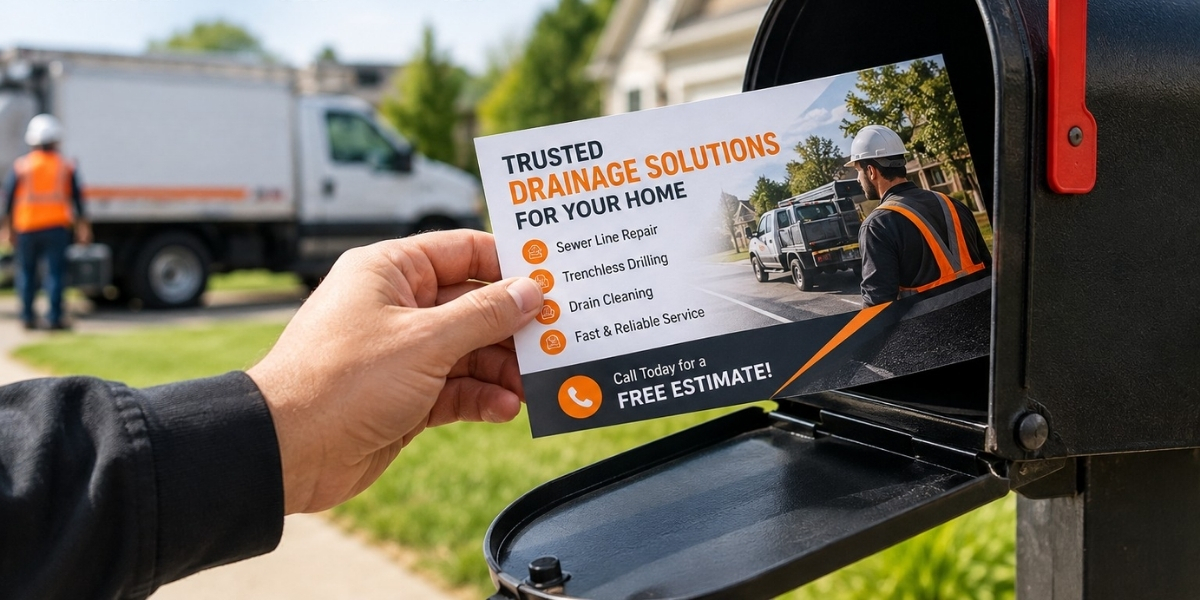
Direct mail marketing helps contractors win more local jobs by putting a physical postcard in the mailboxes of nearby homeowners. It still works because the mailbox is far less crowded than the inbox, and one clear offer to the right neighborhood brings real phone calls. For local, home-facing trades, an oversized postcard sent through EDDM is cheap, easy to target, and works even better when you pair it with your online marketing.
In a world of online ads, a postcard in the mailbox feels almost old-fashioned. That is exactly why it works. This guide explains direct mail marketing for contractors in plain terms: whether it still works, what it costs, and how to use it to get more local jobs.
Does direct mail still work for contractors in 2026?
Yes, especially for local, home-facing work. While everyone crowds the inbox and the feed, the mailbox has quietly emptied out, so your postcard arrives with almost no competition for attention.
The response numbers back it up. The ANA and DMA Response Rate Report puts the average direct mail response rate near 4.4%, compared to about 0.12% for email, which is roughly 36 times higher. For home services specifically, response rates run around 3% to 5%, and a few won jobs easily cover the cost of the whole mailing.
Why does direct mail work so well for local contractors?
Because it is physical, local, and hard to ignore. A postcard gets picked up, read, and often left on the counter, while an email is deleted in a second.
It also builds neighborhood trust. When a homeowner sees that you are already working nearby, you feel like the safe, local choice rather than a stranger. For trades that do residential and neighborhood work, like sewer line replacement or trenchless repairs on local streets, that proximity is a real advantage.
What is EDDM, and why do contractors use it?
EDDM stands for Every Door Direct Mail, a USPS program that delivers your postcard to every address on the mail routes you pick. You do not need to buy a mailing list, which is what makes it so cheap and simple.
At about $0.26 per piece for postage, EDDM is the least expensive way to blanket a neighborhood. You choose the routes around a job site or a target area, and every home on those routes gets your card. For local contractors, it is usually the best place to start.
EDDM or a targeted mailing list: which should a contractor use?
Most local contractors should start with EDDM. It saturates a whole area cheaply, which fits trades where almost any homeowner could become a customer.
A targeted list makes more sense when you want specific homes, like older houses that may need pipe or sewer work, or higher-income areas for bigger projects. Lists cost more per piece and add a data fee, but they cut waste when your ideal customer is narrow. When you are not sure, EDDM to the right routes usually wins on cost per job.
How much does direct mail cost for contractors?
Less than most owners expect. All in, an EDDM postcard usually costs about $0.39 to $0.60 per piece once you add printing and postage, so a 5,000-piece drop runs roughly $2,000 to $3,000.
The math is what matters, not the per-piece price. Say you mail 5,000 homes at a 2% response, that is around 100 people who call, scan, or visit your site. If a handful become jobs and your average ticket is a few thousand dollars, one or two jobs can pay for the entire mailing, and the rest is profit.
Direct mail is one line in your wider budget, not the whole plan. Our breakdown of a contractor marketing budget shows how to size it against your other channels so nothing gets overspent.
What should a contractor's mail piece say?
Keep it simple. A cluttered postcard gets thrown out, while one clear message gets a call. These seven things make a contractor mailer work:
How do you target the right neighborhoods?
Start where you are already working. Mailing the streets around a current job lets you say you are working in the area, which lifts response by around 15% to 25% over cold mailing.
From there, pick routes that fit the work. Older neighborhoods for sewer and pipe repairs, newer developments for utility and conduit work, or higher-value areas for bigger projects. The tighter your target, the less you waste.
How do you track direct mail results?
This is where most contractors fail, and it is easy to fix. If you cannot measure a mailing, you cannot know what worked or repeat it.
Put a QR code, a unique phone number, and a simple promo code on every card, and point them to a specific page on your site. Then you can see exactly how many calls and jobs each drop produced.
Send those scans to a page built to convert, not your busy homepage. Our guide on why a website fails to turn visitors into calls covers the simple fixes that keep a mailed lead from slipping away.
Should you combine direct mail with digital marketing?
Yes, and this is where direct mail really pays off. On its own, a postcard is a single touch. Paired with your online presence, it becomes part of a system that follows the buyer everywhere.
When a homeowner gets your card, many will search your name before calling, so you want to be easy to find. A strong Google Business Profile and solid local search visibility turn a mailed reminder into a booked job.
You can also run ads to the same neighborhoods you mailed, so people see your postcard and then your name online. That mail-plus-digital combination is the heart of a full marketing plan for construction companies, and it beats either channel used alone.
Is direct mail right for every contractor?
No, and it is worth being honest about that. Direct mail shines for local, residential, and neighborhood work where any nearby home could be a customer.
It is a poor fit for winning municipal or large infrastructure contracts, which are decided by bids and relationships, not postcards. If most of your work is public or commercial, your budget is better spent on the channels that reach those buyers, covered in our guide on how to get more contractor leads.
What mistakes do contractors make with direct mail?
A few habits waste the whole budget. Watch for these:
- A cluttered card with no single clear offer.
- Paying $1 or more per piece for an overpriced list when EDDM would do.
- No QR code, promo code, or unique number, so nothing is tracked.
- Mailing once and quitting before the area remembers you.
- Slow follow-up that lets a warm call go cold.
Avoid these and direct mail becomes a steady, affordable source of local jobs.
Frequently asked questions
Does direct mail marketing work for contractors?
Yes, for local and residential work. Direct mail averages about a 4.4% response rate, far above email, and a few won jobs usually cover the cost of the whole mailing.
How much does direct mail cost for contractors?
An EDDM postcard runs roughly $0.39 to $0.60 per piece all in, so a 5,000-piece drop costs about $2,000 to $3,000. You pay per piece, with no mailing list needed for EDDM.
What is EDDM for contractors?
EDDM, or Every Door Direct Mail, is a USPS program that delivers your postcard to every home on the routes you choose. It needs no mailing list and costs about $0.26 per piece in postage.
How do you track direct mail results?
Put a QR code, a unique phone number, and a promo code on the card, pointing to a specific landing page. That lets you count the exact calls and jobs each mailing produced.
Is direct mail better than digital marketing?
Neither wins alone. Direct mail builds local trust and saturation, digital captures and follows up. The best results come from running them together.
Direct mail is a strong local play, but it works best as one part of a plan that also keeps you visible online, active on social media, and backed by real results like the ones in our case studies. If you would rather have a team run the whole mix, our trenchless and utility marketing specialists work only with contractors in these trades.
Want this handled for you?
We do this for trenchless contractors every day. Book a free strategy call and we will map a plan for your market.