Industrial clients hire the hydro excavation company that is prequalified, proven safe, and easy to find and trust. Winning refineries, plants, and utilities is less about the lowest price and more about clearing their safety and vendor requirements, then being visible when their buyers look.
This guide covers how hydrovac companies land steady industrial work, in plain terms. It walks through what these buyers screen for, how to get approved, and how to get found. The work is out there; the trick is clearing the bar to reach it.
Why are industrial clients worth the effort?
Industrial work tends to be steady, higher-value, and repeatable. A refinery, power plant, or utility that trusts your crew calls again for the next daylighting job, turnaround, or shutdown.
That reliability beats chasing one-off jobs that end the moment they are done. One approved vendor relationship with a plant can keep your trucks busy for years, often with predictable, scheduled work.
The trade-off is a higher bar to get in. Industrial buyers screen hard on safety and paperwork before they let a contractor on site, which is exactly why the work is worth protecting once you win it. Once you are in, the relationship tends to renew on its own.
What does industrial hydrovac work look like?
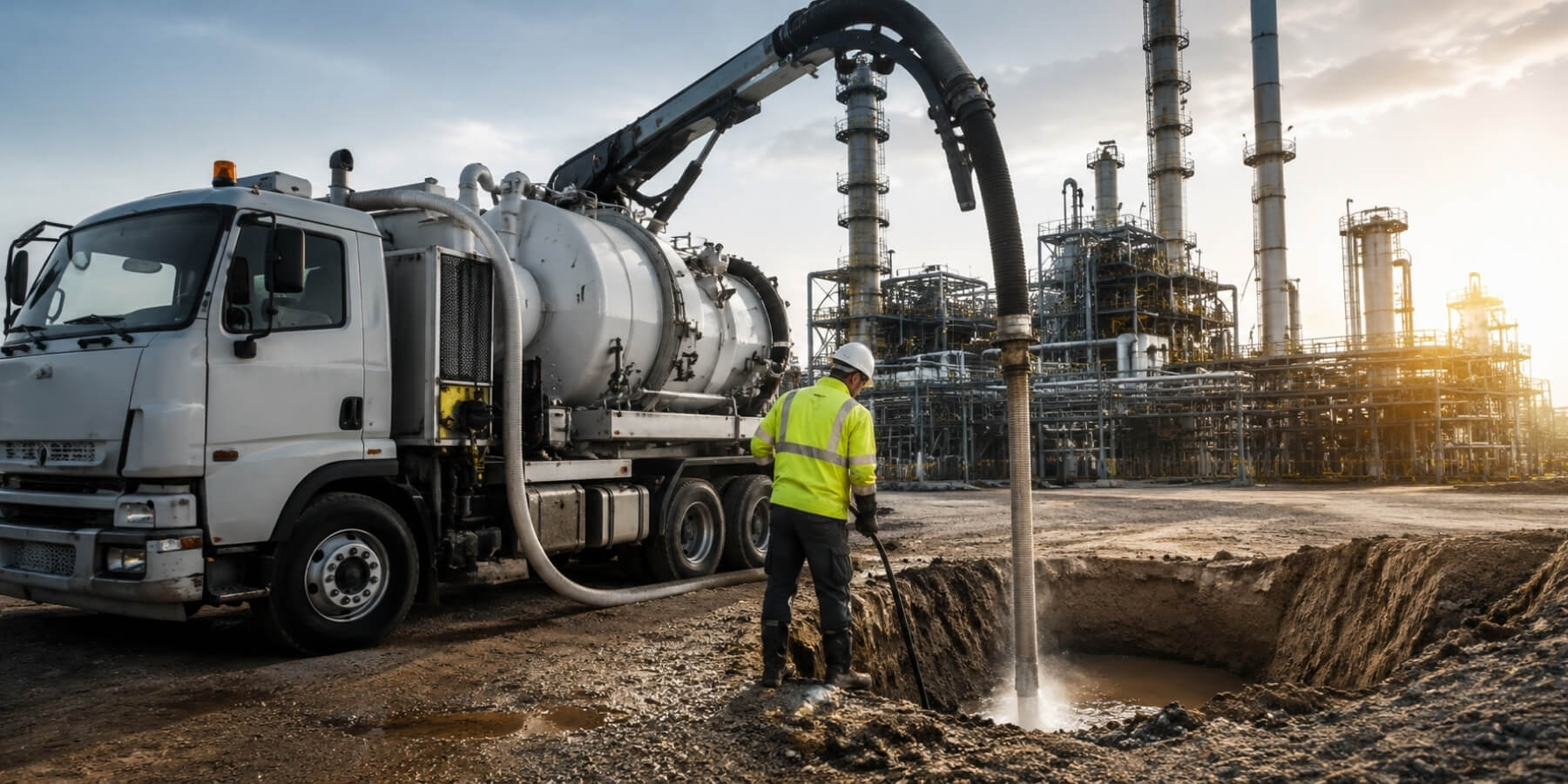
Industrial clients call for non-destructive digging where a backhoe is too risky. Knowing which jobs a plant needs, and showing you do them safely, is half the pitch.
- Daylighting and potholing to expose buried pipes and cables before work starts.
- Slot trenching for new lines without disturbing the ground around them.
- Cleaning tanks, pits, and debris inside plants and refineries.
- Exposing pipelines and utilities during turnarounds and shutdowns.
- Emergency digs when a line is struck or a leak needs fast access.
How is industrial work different from residential jobs?
Residential hydrovac is often one call, one dig, paid on the spot. Industrial work is a vetted, ongoing relationship with paperwork, safety reviews, and set schedules.
That makes the sales process slower, but the payoff is bigger and steadier. You are not closing a single job, you are earning a spot on a vendor list.
It also means your marketing has to speak to a different buyer. A facility manager cares about safety, compliance, and reliability, not a low weekend rate.
What do industrial buyers look for in a hydrovac contractor?
Before a plant lets your vacuum truck through the gate, they check whether you are a safe, qualified vendor. Miss one requirement and you are off the list before the conversation starts.
- A strong safety record, measured by your TRIR and EMR.
- Prequalification on the platforms they use, like ISNetworld or Avetta.
- Proper insurance and bonding for industrial sites.
- Trained, certified operators and documented procedures.
- Round-the-clock emergency and turnaround availability.
- Proof of past industrial work, not just residential jobs.
The contractors who win keep all of this current and easy to share. When a plant needs a hydrovac crew fast, the approved, documented vendor gets the call, not the one still gathering paperwork. Speed and readiness matter as much as capability.
How do you get prequalified with industrial plants?
Most industrial sites will not hire a contractor who is not registered on a contractor-management platform. The common ones are ISNetworld, Avetta, PEC, and Veriforce, and many plants require a specific one.
Getting listed means creating an account, completing their safety questionnaires, and uploading your insurance, safety program, and training records. It takes effort up front, but it is the key that unlocks the gate. Many plants will not even take your call until you are listed.
Keep your profile current. An expired certificate or a lapsed insurance document can pull you off a plant's approved list without warning. Ask each target plant which platform they use, then start there.
How does your safety record win or lose the job?
For industrial buyers, safety comes first, second, and third. They screen your TRIR and EMR before they look at your price, because one incident on their site becomes their problem too.
Keep your numbers low, document every job, and train your crews well. A clean, well-recorded safety history opens doors that a low bid never will, and it protects the relationships you already have.
When you pitch a plant, lead with safety. Show your record, your certifications, and your procedures, and you answer their biggest question before they even ask it. Safety is not just compliance here; it is your main sales pitch.
What mistakes keep hydrovac firms out of industrial work?
A few gaps quietly keep good crews stuck on residential jobs. Watch for these:
- Skipping prequalification, so you never clear the gate.
- Letting insurance or safety documents lapse.
- A thin safety record with no paperwork to back it up.
- A website that shows driveway jobs instead of plant work.
- Going quiet after one job instead of staying in front of the buyer.
Fix these and you look like a plant-ready vendor, not a residential contractor hoping for a shot.
How do you get found when industrial buyers search?
Plant managers, procurement teams, and EPC contractors look online to find and vet hydrovac crews. If you are invisible in search, you are not on their shortlist. Even a referral will check your site before they call, so what they find there matters.
Ranking on Google puts you in front of them the moment they look. Strong search visibility helps industrial buyers find you for daylighting, potholing, and vacuum excavation work.
A clear website does the rest, showing your safety record, certifications, fleet, and industrial projects up front. Because so much industrial hydrovac work involves exposing buried lines, it pairs naturally with utility locating, which the same buyers often need on site.
How do you build relationships that bring repeat work?
Industrial work runs on trust and availability. Stay in touch with the facility managers, EPCs, and general contractors who assign jobs, and be ready when a turnaround or shutdown hits.
Answer the phone at 2 a.m., show up prepared, and finish clean. That reliability is what turns a first job into a standing spot on the vendor list. Plants remember the crew that made a bad day easier.
Ask satisfied plant contacts for references, and keep a few strong industrial reviews visible. Trenchless Marketing Agency helps hydrovac crews put that proof where industrial buyers look. For more ways to keep the pipeline full, see our guide on getting more trenchless leads.
Frequently asked questions
What certifications do industrial hydrovac clients require?
Most require registration on a contractor-management platform such as ISNetworld or Avetta, plus current insurance, a written safety program, and operator training records. The exact list depends on the plant.
How important is a safety record for industrial work?
It is the single biggest factor. Industrial buyers screen your TRIR and EMR before anything else, so a clean, documented record is your strongest selling point.
How long does it take to get on a plant's vendor list?
Often a few weeks to a couple of months, depending on how complete your prequalification package is. Keeping your documents current speeds up every future approval.
What is daylighting, and why do industrial clients need it?
Daylighting uses pressurized water and a vacuum to expose buried lines without damaging them. Industrial sites need it because a strike near a live pipe or cable can be dangerous and costly.
Do I need different marketing for industrial and residential clients?
Yes. Industrial buyers respond to safety records, certifications, and proof of plant work, while residential buyers respond to speed and price. Your pages and pitch should match the buyer.
Want this handled for you?
We do this for trenchless contractors every day. Book a free strategy call and we will map a plan for your market.