Conduit installers win telecom and utility contracts by proving they can place the pathway reliably and at scale, then getting known to the people who award the work. That means telecom construction managers, electric utilities, and the prime contractors who sub out conduit. Serving both markets, not just one, is what keeps your pipeline full through slow seasons.
This guide covers how to win both kinds of work, in plain terms. It walks through who buys conduit, what they look for, and how to get in front of them well before the contract is ever awarded.
Why chase both telecom and utility work?
Conduit is the pathway for more than fiber. The same duct banks and bored runs that carry telecom lines also carry power and utility circuits, which means two markets are open to you, not one.
Leaning on a single market is risky. When telecom buildouts slow down, utility work can keep your crews busy, and the reverse holds just as well. Contractors who ride only one wave feel every dip in it.
Positioning as a contractor who serves both widens your pipeline and steadies your revenue. It also makes you more useful to the primes who need one reliable pathway partner across projects. A partner who can cover both markets is worth more than two who each cover one.
| Telecom | Utility | |
|---|---|---|
| Buyers | Carriers, ISPs, fiber primes | Electric utilities, EPCs |
| What they need | Conduit before the fiber pull | Duct banks for power |
| Wins on | Capacity and speed | Safety and reliability |
What conduit work do these jobs need?
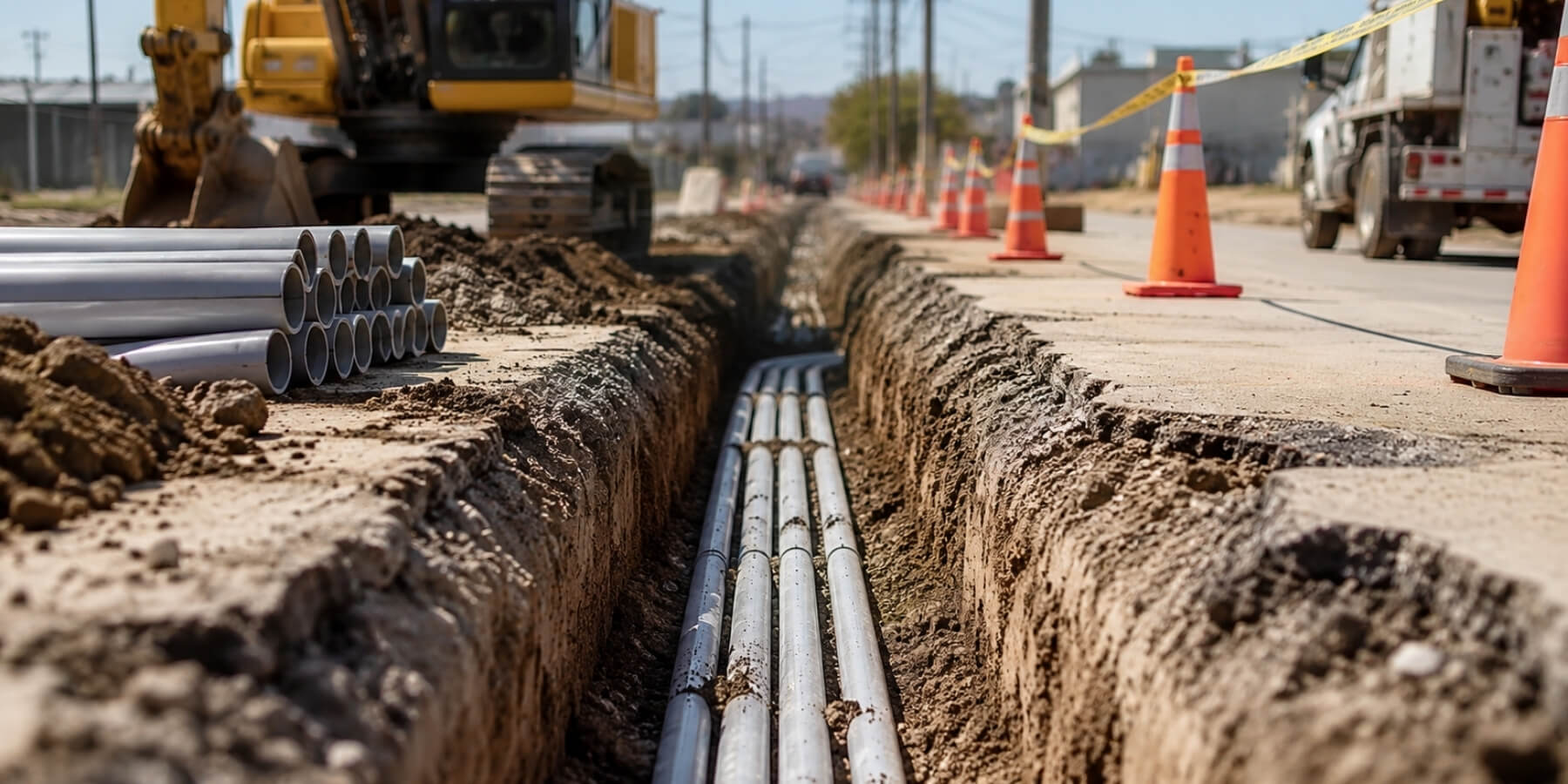
Both markets need the same core skill: placing a clean, tested pathway underground. That can mean HDPE conduit, concrete-encased duct banks, innerduct, and the vaults, handholes, and pull boxes that go with them.
The pathway is placed by directional boring under roads and obstacles, or by open trenching where it fits. Telecom jobs often run many conduits for future fiber, while utility duct banks carry heavier power circuits under stricter rules.
Knowing the differences lets you speak each buyer language. A telecom manager and a utility engineer care about different details, even when the work looks similar from the truck. Showing you understand both signals that you are a serious pathway contractor.
Who awards telecom and utility conduit contracts?
On the telecom side, the buyers are carriers, internet providers, and the fiber primes building networks. They need conduit placed before fiber is ever pulled, often on tight buildout schedules. Hit those schedules and you become a name they call again.
On the utility side, electric utilities and their engineering firms need duct banks for power distribution. Beyond both, large EPCs, general contractors, and municipalities award conduit work as part of bigger programs. Each of these buyers hands out steady work once you are approved.
What do these buyers look for in a conduit contractor?
Whether the job is telecom or utility, buyers want a contractor who will not slow the program down. They check that you are qualified, safe, and able to handle the footage on schedule. A single weak vendor can stall an entire program, so they screen carefully.
- Prequalification and a master service agreement in place.
- A strong safety record they can verify.
- Capacity to bore and trench at the pace they need.
- Proof of both telecom and utility conduit work.
- Reliable crews that hit schedule and cleanup standards.
- Proper insurance and bonding for their sites.
How do you get prequalified and on master service agreements?
Most carriers, utilities, and primes will not hand out work until you are an approved vendor. That usually means prequalifying and signing a master service agreement that covers safety, insurance, and terms.
Register with the buyers you want, complete their safety and vendor packages, and keep everything current. An MSA turns one-off jobs into a standing relationship where work can flow to you all year. That steady flow is what lets you plan crews and equipment with confidence.
How do you scale to bigger programs?
Bigger telecom and utility programs go to contractors who can prove capacity. That means enough crews, equipment, and boring and trenching output to keep a program on pace.
Grow steadily, document your footage and safety, and keep your agreements current with the buyers running the largest programs. When a prime needs a partner who can scale with them, you want to already look the part. Capacity you can prove opens doors that capacity you only claim never will.
How do you win work through primes and EPCs?
Conduit is often a subcontract scope inside a larger telecom or utility program. That means many of your best contracts come through the primes and EPCs running those jobs, not through public bids you find on your own. Getting close to those primes is often the fastest path to steady work.
Build relationships with the project managers who assign conduit scope, and prove you make their job easier. A prime who trusts your crews to place the pathway on time will bring you onto the next program without a competitive scramble. One reliable performance often leads straight to the next award.
How do you get found when buyers search?
Even in a relationship-driven business, buyers look you up. A telecom construction manager or utility engineer vetting a new conduit sub will search your name and your trade before they call. What they find in those few minutes shapes whether you get the call at all.
When they search for a conduit specialist, Google Ads can put you in front of them right away. A clear online presence showing your bored runs, duct banks, and completed footage backs it up.
Steady conduit installation marketing keeps that visibility going between projects. For more ways to keep the pipeline full, see our guide on getting more trenchless leads.
What makes a conduit installer win over the competition?
When buyers compare qualified contractors, reliability and proof break the tie. The one who clearly delivers on schedule, safely, and across both markets stands out. On a fast-moving program, a dependable pathway sub is worth a premium.
Show your capacity, your safety record, and real projects on both the telecom and utility sides. Our team at Trenchless Marketing Agency works only with trenchless and utility contractors, so we know how these contracts are won.
What mistakes keep conduit installers out of bigger contracts?
A few gaps quietly cap a company at small, one-off jobs. Watch for these:
- Skipping prequalification and master service agreements.
- Serving only one market and stalling when it slows.
- No proof of the footage and capacity primes need.
- Waiting to be found instead of building visibility.
- Letting safety or insurance documents lapse.
Close these and you move from occasional subcontracts to standing program work.
Frequently asked questions
Do I need to pick telecom or utility?
No. Serving both spreads your risk and keeps crews busy when one market slows. Most successful conduit installers work across both.
How do I get on a carrier or utility vendor list?
Prequalify with the buyer, complete their safety and insurance package, and sign a master service agreement. Keeping your documents current keeps you eligible.
What matters most to win conduit contracts?
Being qualified, safe, and able to place footage on schedule. Buyers award repeat work to the contractor who never slows the program down.
Can marketing help win telecom and utility work?
Yes. Being easy to find and easy to trust online gets you shortlisted, and proof of past work helps primes and owners choose you.
How do I show enough capacity for bigger programs?
Document your crews, equipment, and completed footage, and share real projects on both the telecom and utility sides. Buyers award scale to contractors who can prove they can keep up.
How long does it take to get approved as a vendor?
Often a few weeks to a couple of months, depending on the buyer. Start early and keep your package current so you are ready when the work comes.
Want this handled for you?
We do this for trenchless contractors every day. Book a free strategy call and we will map a plan for your market.