Slip lining contractors get in front of municipal decision-makers by learning who actually chooses the method, then reaching those people where they research and decide. That means the consulting engineers who write specs, the city and utility engineers who evaluate options, and the industry circles where they all gather. The engineer who knows and trusts your slip lining work is the one who specifies it.
This guide covers who those decision-makers are and how to reach them, in plain terms. It walks through getting your method into the spec and building the trust that wins the work, long before the bid opens.
Who are the municipal decision-makers for slip lining?
Winning municipal rehab work starts with knowing who decides. It is rarely one person, and the buyer who signs the contract is often not the one who chose the method. Treating them all the same is why many contractors never break in.
The design or consulting engineer usually writes the spec and picks the rehab method. City and utility engineers evaluate options, the public works director approves the budget, and an asset manager often flags the aging pipe in the first place.
Each of them shapes the outcome at a different stage. Getting in front of the right one at the right time is what puts slip lining, and your company, in the running. Miss the early stages and you are left fighting on price at the end.
What does slip lining actually solve for them?
Slip lining rehabilitates a deteriorated pipe by inserting a new carrier pipe inside the old one and grouting the space between them. It is often the right call for large-diameter culverts, storm drains, and gravity or pressure mains that still hold their line but have lost structural strength.
Decision-makers reach for it when they need a durable structural fix without a full dig-and-replace. Knowing exactly where it fits lets you guide an engineer toward it with confidence.
When you can explain, in their terms, why slip lining is the smart choice for a given line, you stop being a vendor and start being an advisor. That shift is what gets you into the conversation early.
How do these decision-makers choose a method and contractor?
For large-diameter culverts, storm drains, and gravity mains, the design engineer weighs the rehab options and writes the method into the spec. Slip lining often wins where a structural carrier pipe is the right fix. The engineer needs to be sure that choice will last for decades.
The contractors an engineer already trusts shape what goes into that spec. If your slip lining work is known and proven, your method is more likely to be the one specified, which puts you a step ahead before the bid even opens. By the time others see the bid, the direction is often already set.
How do you get your method into the spec?
The spec is written long before the bid posts, so that is where the real influence happens. Your goal is to be a known, credible option when the engineer decides how to rehab a line. Once the spec is set, the choice is largely made.
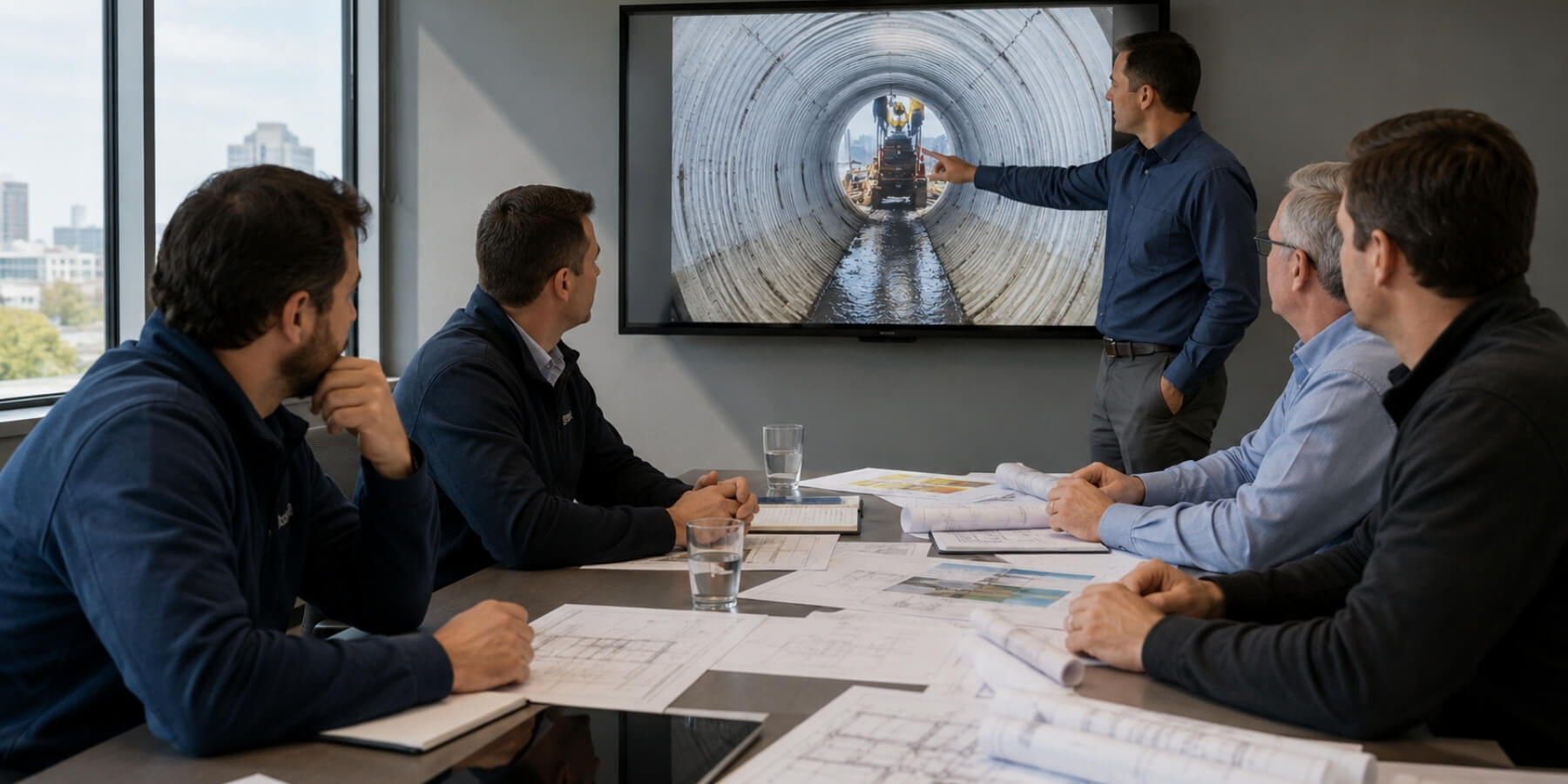
Educate the consulting engineers who write specs on where slip lining fits and why it holds up. Share design details, past projects, and the conditions where it beats other methods, so they reach for it with confidence. Make their job easier, and they will remember you when the next line needs a plan.
How do you build relationships with engineers and public works?
Municipal decision-makers trust people and track records, not cold pitches. The work here is showing up in the places where they learn and connect.
Join the industry associations your engineers belong to, present at trenchless conferences, and offer lunch-and-learn sessions to engineering firms and public works teams. Connect with engineers on LinkedIn and keep the relationship warm between projects. A face and a track record beat a cold email every time.
This is the same relationship-first approach that works across public rehab work. Our guide on how pipe bursting contractors reach municipal buyers covers a related path, since the buyers and stages overlap.
How do you stay top of mind between projects?
Municipal cycles are long, and the gap between meeting an engineer and winning their job can be a year or more. The contractors who stay visible in that gap win more of the work.
Keep sharing project updates, useful technical notes, and the occasional check-in. When a line finally fails and the engineer needs a rehab plan, you want to be the first name that comes to mind. Consistency over the long haul is what builds that kind of recall.
How do content and visibility help you get in front of them?
Engineers and public works staff research before they decide. Useful content puts your name in front of them while they are looking for answers. The contractor who shows up with the best information often earns the first call.
Publish case studies of large-diameter rehab jobs, with the problem, the design, and the result. Clear technical content builds you into the expert an engineer wants to call when a similar line fails. Real numbers and real conditions carry far more weight than marketing claims.
When a decision-maker searches for a slip lining specialist, Google Ads can put you at the top of that moment. Steady slip lining marketing keeps your projects and expertise visible between jobs.
What makes a decision-maker trust a slip lining contractor?
Trust comes from proof that you can do this specific work. Municipal decision-makers carry real risk when they choose a contractor, so they lean toward the safe, proven pick. Nobody wants to explain a failed rehab on public infrastructure.
Show relevant large-diameter rehab projects, references from other agencies, and a clean safety and completion record. Present yourself as a technical partner who solves problems, not just a low bidder chasing a number. Our team at Trenchless Marketing Agency works only with trenchless and utility contractors, so we know how these decisions get made.
What mistakes keep slip lining contractors out of the decision?
A few habits quietly leave you off the shortlist. Watch for these:
- Waiting for the bid instead of reaching engineers earlier.
- Pitching price when engineers care about risk and fit.
- No case studies of similar large-diameter rehab work.
- Skipping the associations and conferences where they gather.
- Being invisible online when a decision-maker looks you up.
Close these and you move from an afterthought to a specified option.
Frequently asked questions
Who actually decides which contractor gets a municipal rehab job?
Usually a mix: the design engineer specifies the method, city and utility engineers evaluate it, and public works approves. Reaching the engineers early matters most.
How do I get slip lining specified?
Educate the consulting engineers who write specs on where slip lining is the right structural fix. When they trust your work, your method is more likely to make the spec.
Do conferences and associations really help?
Yes. They put you face to face with the engineers and public works staff who decide, and they build the familiarity that a cold email never will.
Can marketing reach municipal engineers?
Yes. Technical content, case studies, LinkedIn, and search visibility all reach engineers while they research, which is exactly when you want to be seen.
How long does it take to build these relationships?
Often months to a year, since municipal cycles are slow. Start before you need the work, and stay visible so you are known when a project finally moves.
What content works best with engineers?
Detailed case studies and clear technical explanations of where slip lining fits. Engineers trust specifics, so show real projects, conditions, and results rather than sales claims.
Want this handled for you?
We do this for trenchless contractors every day. Book a free strategy call and we will map a plan for your market.