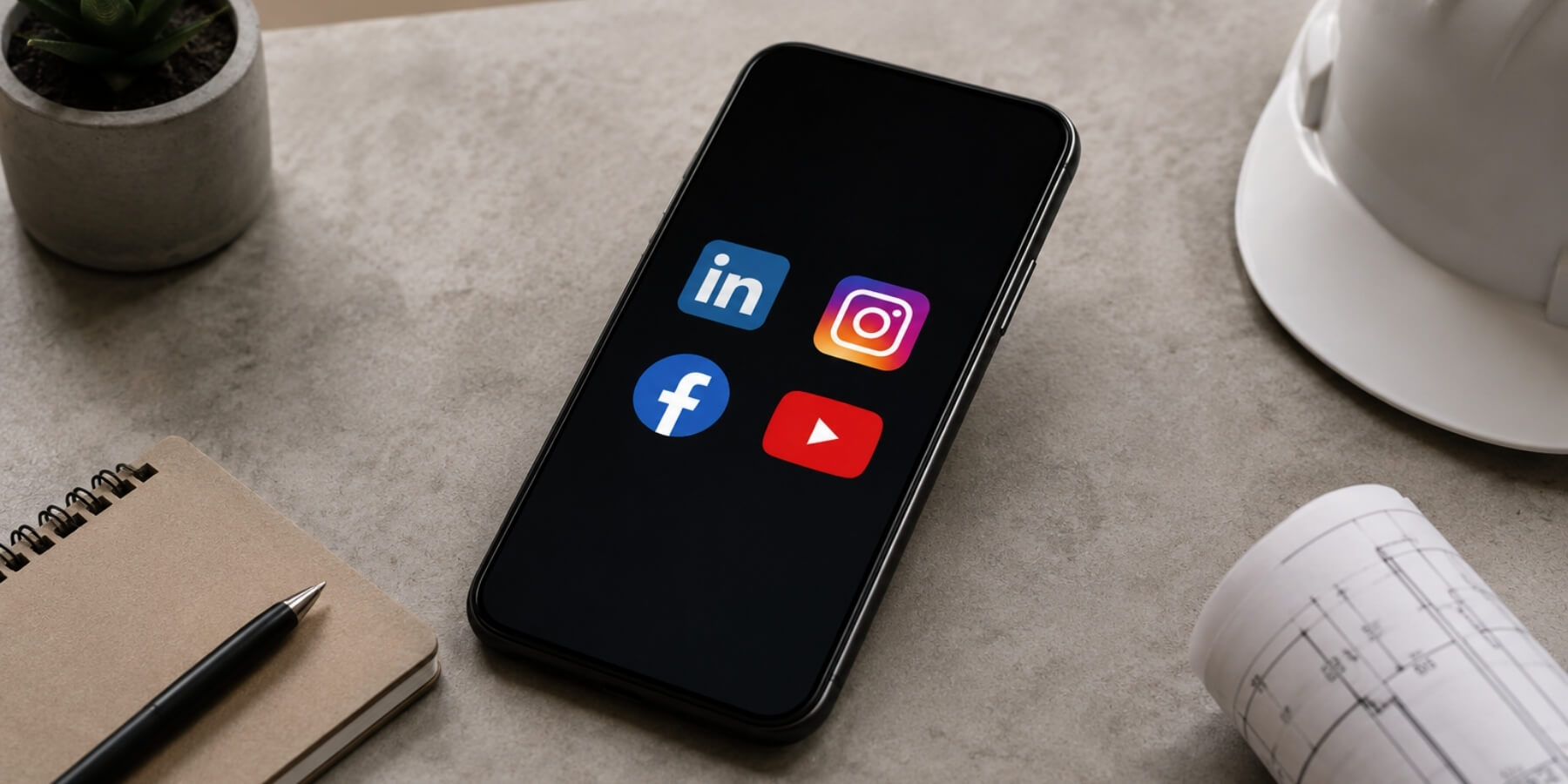
The best social media platforms for construction contractors are LinkedIn, Instagram, Facebook, and YouTube, each doing a different job. LinkedIn reaches commercial and municipal buyers, Instagram and YouTube show your work, and Facebook drives local reach and reviews.
You do not need to be on all of them. This guide covers which platforms fit which buyers, what to post, and how to keep it simple, in plain terms. The goal is steady proof of your work, not a full-time posting job.
Why does social media matter for contractors?
Social media is not about going viral. For a contractor, it is proof. When a buyer checks you out before they call, an active profile full of real jobs tells them you are busy, capable, and still in business. An empty or dead profile can quietly raise doubts you never hear about.
It also keeps you top of mind. A general contractor who sees your completed bores in their feed thinks of you when the next project comes up. Most work still comes from being remembered at the right moment, and social media keeps you in that memory.
This holds whether you run HDD, boring, or utility work. The platform matters less than showing up with real proof of the work you do.
Which platform reaches which buyer?
Each platform reaches a different audience, so the right one depends on who hires you. Chasing all of them thin is worse than doing one or two well.
| Platform | Best For | What to Post |
|---|---|---|
| Commercial and municipal buyers | Projects, wins, prequalification | |
| Visual proof of your work | Photos and reels of bores and crews | |
| Local reach and reviews | Community posts, reviews, local jobs | |
| YouTube | Showing the process | Project and how-to videos |
LinkedIn: for commercial and municipal buyers
LinkedIn is where general contractors, engineers, and city staff spend their work day. If you chase commercial or public projects, this is the platform that reaches the people who award them. It is more about credibility than reach, so quality beats quantity here.
Post your completed projects, prequalifications, and safety milestones. Connect with project managers and procurement staff, and stay visible so your name is familiar when a bid comes up.
You do not need to post daily. A couple of strong project updates a month keeps you in front of the right people without eating your time.
Instagram: for visual proof
Instagram is built for photos and short video, which is perfect for a trade that produces striking work. A clean bore, a rig on site, or a tidy finished crossing all show well here. Good visuals do the selling for you before a word is spoken.
Post job-site photos and short reels of your crews at work. Homeowners and smaller commercial clients often browse here, and strong visuals build quick trust.
Treat it as a living portfolio. When a prospect asks what you have done, you can point them to a feed full of finished work instead of digging up old photos.
Facebook: for local reach and reviews
Facebook still reaches a wide local audience, especially for residential and small commercial work. It is also where many customers leave and read reviews.
Share local projects, respond to reviews, and join community and contractor groups. For a company that works a defined service area, Facebook keeps you visible close to home.
It is also a fast way to answer questions. Many local buyers message a business through Facebook before they ever pick up the phone, so keep an eye on your inbox.
YouTube: for showing the process
YouTube lets you show how the work is done, which builds trust with buyers who do not understand trenchless methods. A short video of a bore from start to finish can answer a dozen questions at once, and it sets you apart from contractors who only show finished photos.
It also helps you get found, since YouTube videos show up in Google search. A few clear project or how-it-works videos can keep working for you for years.
You do not need studio quality. A steady phone video with a short explanation is enough, and one good clip can earn views long after you post it.
What should construction contractors post?
You do not need a marketing degree to post well. The best content is simply proof of the work you already do, shared consistently. If you can take a photo and write a sentence, you can run a solid contractor profile.
- Completed project photos, with a line on what you did.
- Before-and-after shots that show the result.
- Your crew and equipment on the job.
- Safety practices and milestones.
- Customer reviews and short testimonials.
- Short videos of a bore, a crossing, or a finished site.
Consistency matters more than polish, so a steady stream of honest posts wins over rare, perfect ones. Keep a habit of snapping a few photos on every job, and you will never run out of things to share.
Should you post yourself or hire help?
Consistency is the hard part. Most contractors start strong, then go quiet once the season picks up, and a stale profile can look worse than none at all. The goal is a rhythm you can hold all year, not a burst you cannot sustain.
If you can post a few times a week from the job site, do it. Snap a photo, add a short caption, and keep it moving. Ten minutes on site is often all it takes.
If that never happens, hand it off. Our social media marketing keeps your profiles active with real project content, so you stay visible without the extra work. Our team at Trenchless Marketing Agency works only with trenchless and utility contractors, so the posts sound like your trade.
How do you turn social media into work?
Followers do not pay the bills; leads do. The trick is guiding people from a post to a real next step.
Put your phone number and website in every profile, and add a clear call to action. When someone comments or messages, reply fast, because interest fades within hours. A slow reply often means the job goes to whoever answered first.
Point your best posts back to your website, where a visitor can see your services and request a quote. Social media earns the attention; your site turns it into work.
What social media mistakes should contractors avoid?
A few habits waste the effort. Watch for these:
- Posting once, then going silent for months.
- Only sharing sales pitches instead of real work.
- Ignoring comments, messages, and reviews.
- Using stock photos instead of your own jobs.
- Trying to be on every platform at once.
Pick one or two platforms, post real work, and answer people. That beats a scattered effort every time.
Frequently asked questions
Which platform is best if I only pick one?
It depends on your buyers. Pick LinkedIn for commercial and municipal work, or Facebook and Instagram for local and residential jobs.
How often should I post?
A few times a week is plenty. A steady rhythm matters more than volume, so pick a pace you can keep during your busy season.
Do contractors really get leads from social media?
Yes, though it works best as proof and reach rather than direct sales. It supports the rest of your marketing, and you can read more in our guide on getting more trenchless leads.
Should I run social media ads?
They can help for local and residential work, but for most contractors, a strong organic presence and Google come first. Add paid social once the basics are solid.
Do I need a company page or a personal profile?
A company page is best for reviews, ads, and a professional presence. On LinkedIn, your personal profile also matters, since people connect with people.
How long until social media pays off?
It builds slowly. Expect a few months of steady posting before it becomes a reliable source of trust and reach, which is why consistency matters so much.
Want this handled for you?
We do this for trenchless contractors every day. Book a free strategy call and we will map a plan for your market.